Business Waste Removal Brompton - Health & Safety Policy
 Purpose and scope. This Health and Safety policy sets out the commitment of our business waste removal operation to protect employees, contractors, visitors and members of the public across our rubbish company service area. The policy covers routine commercial waste collections, site clearance, recycling handling and any ancillary operations. It applies to all staff and subcontractors engaged in waste transport, loading, sorting and disposal activities. The aim is to maintain a safe working environment that complies with statutory obligations and good industry practice while minimising environmental impact.
We recognise that safe delivery of commercial rubbish removal services depends on clear responsibilities, systematic risk control and ongoing training. Responsibilities include risk assessment, implementation of control measures and monitoring effectiveness. Management will provide resources for protective equipment, vehicle maintenance and safe handling tools. Employees are expected to follow procedures, report hazards and take reasonable care for their own safety and that of others. The policy emphasises collaboration between management, supervisors and crews in the rubbish removal service area to ensure coherent, consistent practice.
 Legal and regulatory compliance. The company will comply with applicable health and safety legislation and environmental law relevant to waste collection, transfer and disposal. This includes obligations on vehicle safety, manual handling limits, hazardous waste segregation, and safe storage of potentially dangerous materials. We will maintain records of risk assessments, incident reports and training attendance. Where specialist waste streams are encountered, the business waste removal team will follow bespoke protocols to ensure compliance and reduce the risk of contamination or injury.
Risk assessment, control and safe systems of work
Risk assessments will be undertaken for all routine tasks and for any non-routine activities such as site clearances, construction waste removals or emergency debris collection. Assessment outcomes will be used to define safe systems of work that mitigate exposure to manual handling, slips, trips and falls, vehicle movements and sharps. Controls include task rotation, mechanical aids, clearly marked traffic routes and exclusion zones during loading operations. Supervisors will ensure method statements are available for complex jobs and that those statements are communicated to crews.
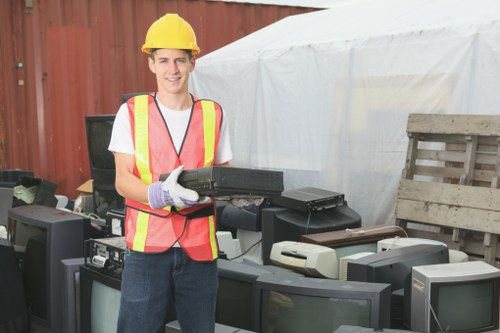
 Personal protective equipment (PPE) and training. Appropriate PPE—gloves, hi-vis clothing, safety footwear, eye protection and respiratory protection where required—will be supplied and maintained. Training is mandatory for all operatives engaged in waste collection and removal tasks, covering safe lifting techniques, handling of hazardous materials, vehicle safety checks and waste segregation rules. Training records will be maintained and refresher sessions scheduled regularly to keep competence at the required level for a professional rubbish removal company service area.
Vehicles and equipment will be subject to pre-use checks and routine maintenance to prevent mechanical failures that could cause incidents. Loading procedures will specify maximum loads, securement methods and limits for manual handling. Where mechanical lifting or compacting equipment is used, only trained personnel are authorised to operate it. Lockout and isolation procedures will be implemented for maintenance, and safe guarding will be in place to protect operatives from moving parts.
Emergency procedures and incident management
 Emergency planning covers first aid provision, spill response, fire procedures and arrangements for dealing with accidental release of hazardous substances. All sites and vehicles will carry a basic spill kit appropriate to the waste types encountered. Incidents and near misses must be reported immediately and investigated proportionately to identify root causes and remedial actions. Lessons learned will be used to update risk assessments and training programmes across the rubbish removal service area.
The company will maintain an appointed first-aider and suitable first aid equipment on depots and vehicles. Emergency contacts, evacuation points and basic rescue arrangements will be communicated to staff during induction and refreshed during toolbox talks. Where incidents involve potentially dangerous waste, the appointed person will liaise with specialist removal teams and relevant authorities to ensure safe containment and disposal while protecting people and the environment.
 Roles and responsibilities. Management is responsible for providing leadership, resources and oversight to ensure this policy is implemented effectively. Supervisors are responsible for day-to-day enforcement of safe working practices, carrying out checks and coaching staff. Employees must cooperate, use provided PPE, follow working procedures and report hazards. Subcontractors engaged in the rubbish removal process must meet the same standards and provide evidence of competency and insurance before work begins. Regular performance reviews and audits will monitor compliance.
Performance monitoring and continuous improvement will be driven by regular site inspections, vehicle audits and review of incident data. Key performance indicators for safety will be tracked and communicated to staff, with corrective actions taken promptly when shortfalls are identified. The company will encourage a positive safety culture where all team members feel empowered to stop unsafe work and suggest improvements to procedures that affect the commercial rubbish removal operation.
Waste segregation and environmental protection. Accurate segregation at point-of-collection reduces risk and helps with recycling targets. Staff will be trained on identifying common hazardous items and segregating them for specialist handling. Procedures will emphasise containment of liquids, safe removal of sharps or contaminated materials and minimising dust and emissions during loading. These measures protect workers and the wider community while supporting sustainable waste management objectives in the service area.
Policy review and distribution. This Health and Safety policy will be reviewed at least annually or sooner following significant change, incident or legislative update. The current version will be accessible to all staff and incorporated into induction materials for new starters and subcontractors. By maintaining robust health and safety arrangements the company commits to delivering reliable, safe and compliant business waste removal services across its service footprint.
